First field
Human wearables
Garments that breathe with the body. Microclimate zones for chest, back, ribs, shoulders, underarms, and neck.

ASTRŒGROUP

Observe. Translate. Build.
ASTRŒDON studies natural systems and converts their principles into wearable, robotic, and environmental architectures. Our first field of work is the human microclimate.
What we investigate
Nature shows the behavior. ASTRŒDON builds the architecture.
ASTRŒDON is not building gadgets. It is building physical systems that help bodies, garments, machines, and environments regulate themselves.
Termite mounds regulate airflow without fans.
Pressure gradients can move air through distributed channels.
Passive routing layers and protected air chambers.
Garments, robotics, shelters, equipment skins.
Honeycomb preserves structure with minimal material.
Distributed cells resist collapse while preserving open volume.
Suspension plenum for airflow under compression.
Wearables, cushions, protective gear, robot skins.
Scales, feathers, and denticles direct flow across surfaces.
Surface geometry can capture, bias, and guide moving air.
Directional intake skins.
Cooling garments, adaptive panels, breathable exteriors.
From observation to form
Before BioVent became a layered architecture, it existed as sketches, comparisons, geometry studies, failed ideas, and repeated attempts to understand how air could be captured, guided, shared, and released through a wearable structure.
The drawing is not the answer. It is the first test of the question.
Sketch → geometry → model
Form
Featured programArchitecture 001
Passive microclimate architecture for breathable systems.
Active R&D
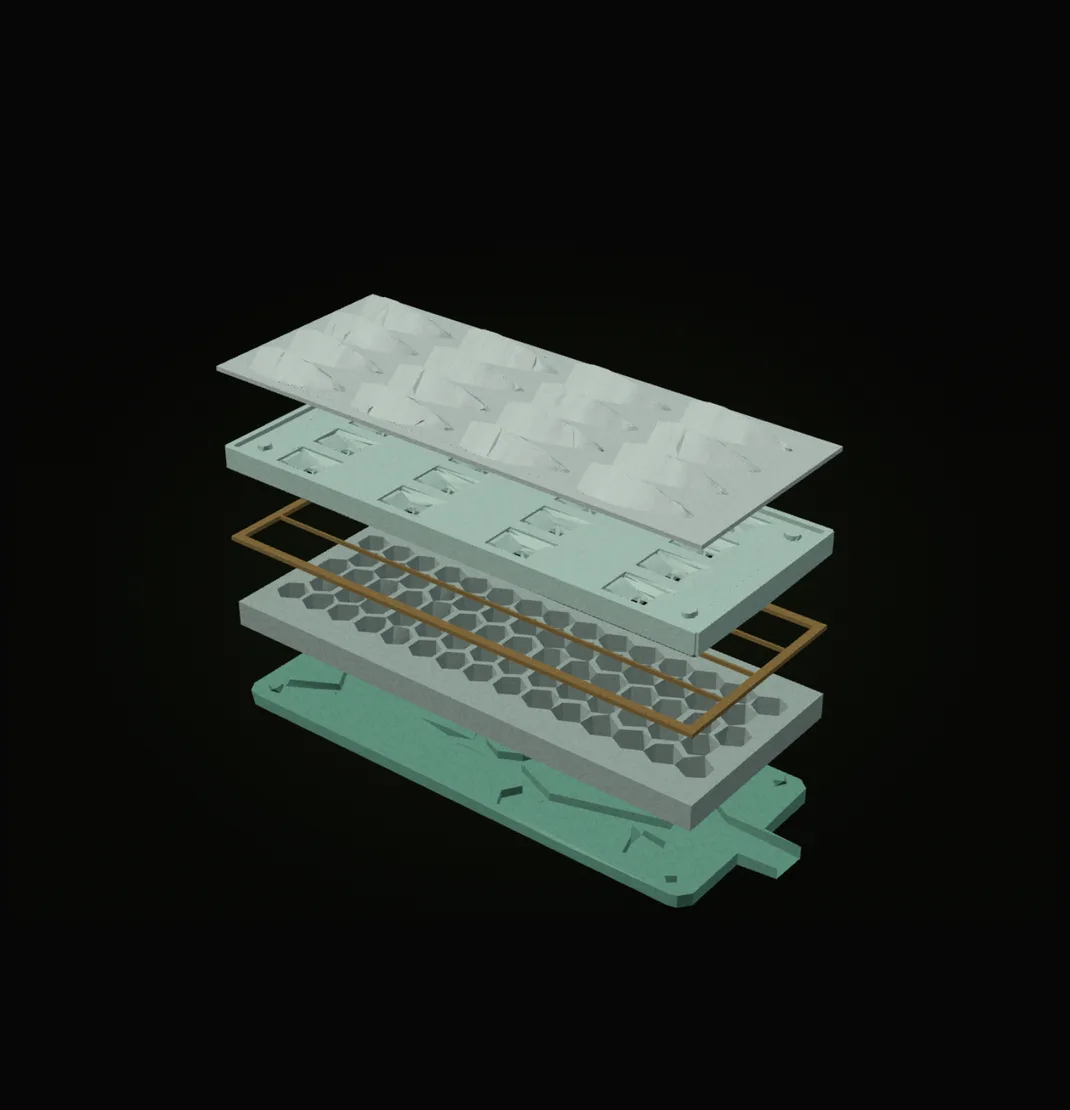
BioVent is a layered passive airflow architecture designed to catch, guide, share, preserve, and route air through a wearable structure.
Each unit is a module. Repeated side by side and stacked, it becomes a panel that can run across a garment.
It is a physical architecture for managing airflow, spacing, pressure, and exhaust inside soft systems.
Layer doctrine
Method
Conceptual flow-routing study
On the model, Airflow indicates the principle: in at the intake, through the layers, out at the exhaust. It is indicative, drawn from the design intent; it is not a simulation result, and the exact routing stays protected.
Show it on the model ↑Prototype · testing
Every architecture moves through the same stages. The stages are shown; their contents are not.
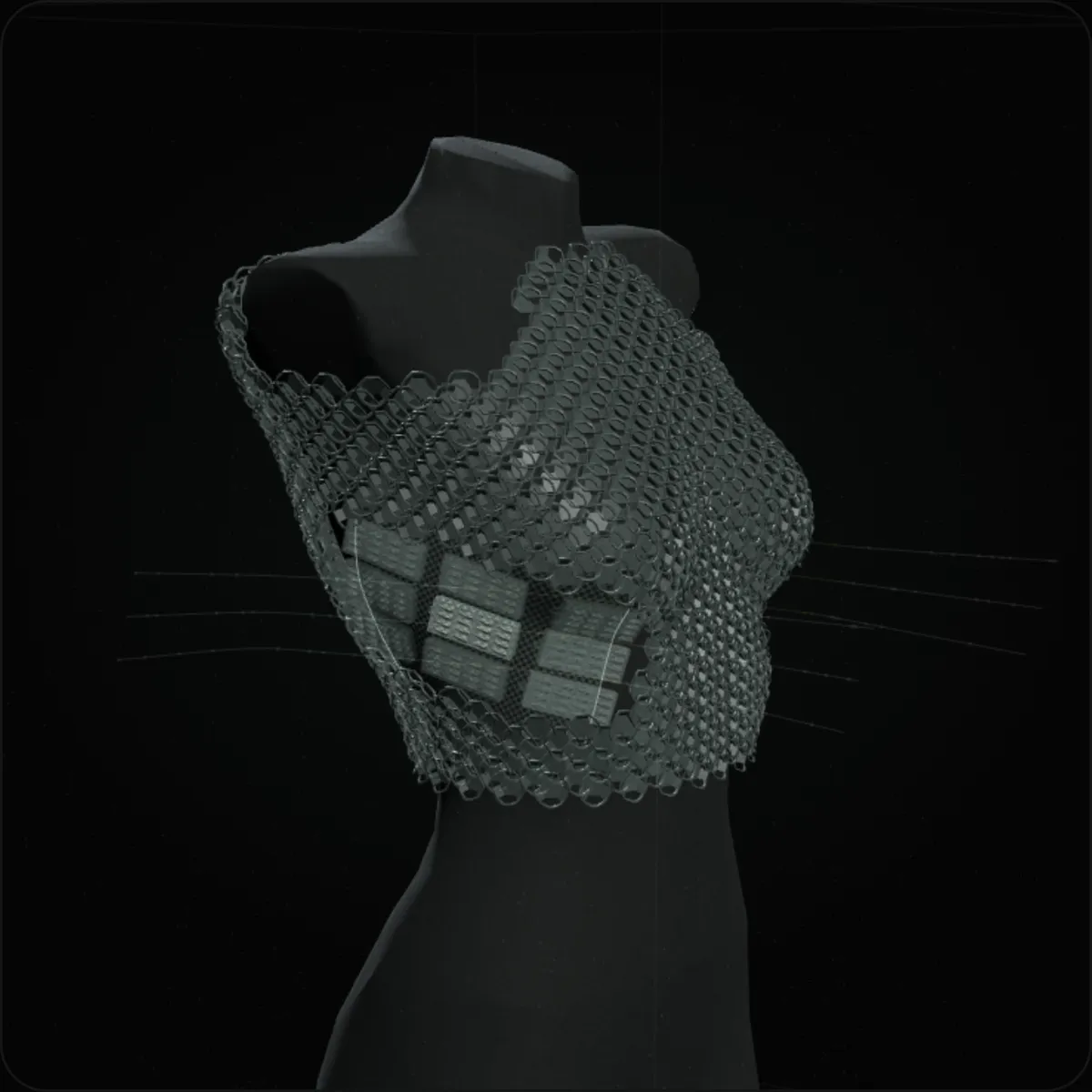
Environment contains the body. The body carries the garment. The garment creates the interface. The interface houses the core.
One number decidesΔTskinSkin-microclimate temperature reduction, in °C, against a matched control garment.
The validation method is defined before the geometry it measures. Results are published only once they are verified. The outcome may be visible; the mechanism stays protected.
Visual flow test rig
The bench rig BioVent's physical tests start from: a 90 mm fan, a clear acrylic chamber and a smoke inlet, with the stack on a simple mount in the middle.
Sketch · hypothesis · what changed · status · program
Future research programs
BioVent is the first program, not the only one. From it, the same logic branches into RÆNO garments, robot breathable skins, sensor-integrated wearables, thermal-gradient research, microclimate control, and field-ready adaptive equipment.
Directions, not products. ASTRŒDON is structured for more than one program, including government-funded research; new programs appear here when they open.
BioVentCore
First field
Garments that breathe with the body. Microclimate zones for chest, back, ribs, shoulders, underarms, and neck.
Direction
Breathable skins for machines that generate heat. Passive exhaust layers for humanoid robots, drones, and field equipment.
Future research
Future systems may use managed heat and humidity gradients for sensing, low-power harvesting, or adaptive response.
Direction
Passive ventilation architecture for protective gear, load-bearing systems, helmets, packs, and occupational equipment.
Direction
A controlled bench for studying airflow, temperature, and humidity inside wearable architectures.
© 2026 ASTRŒGROUP